
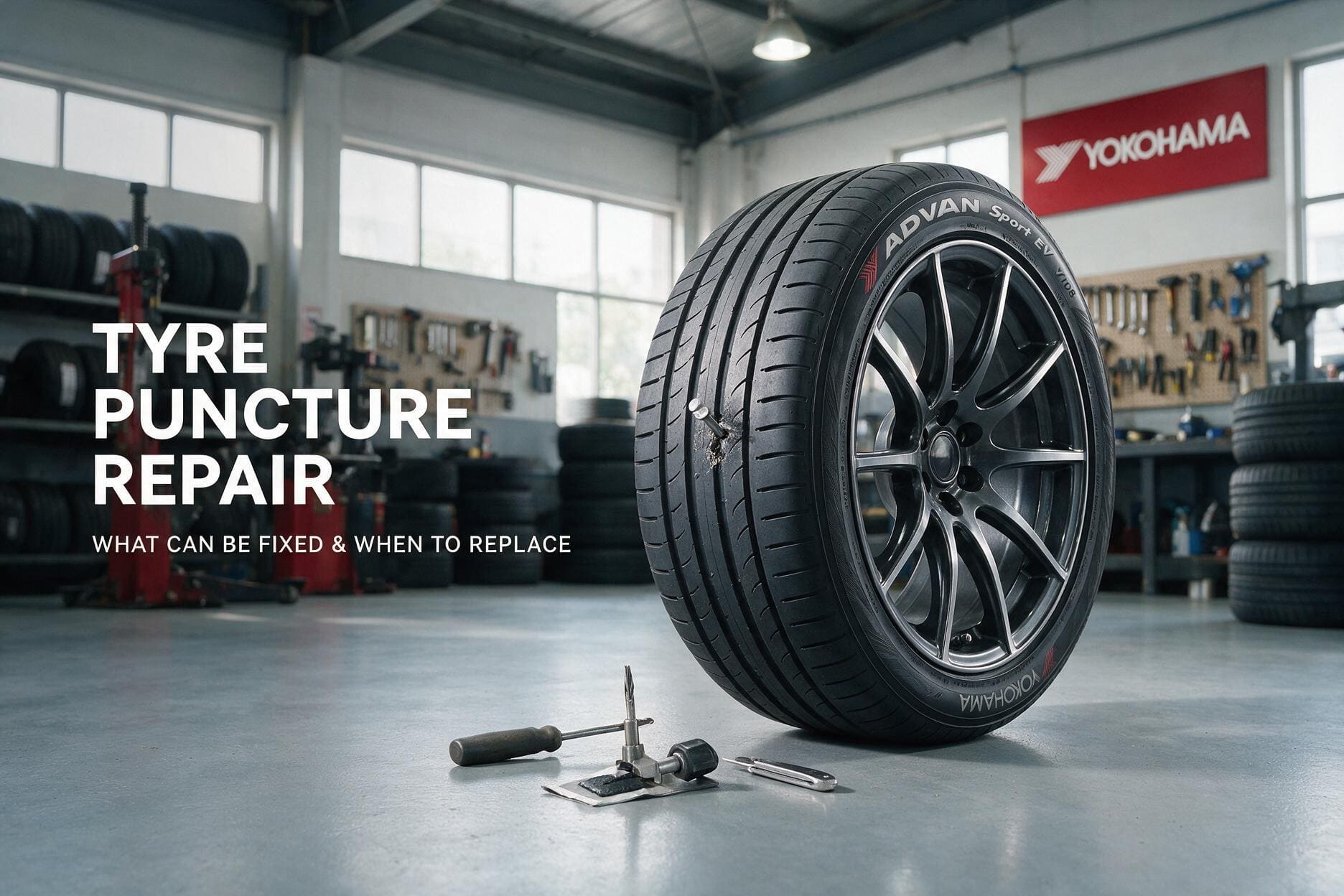
Tyre puncture repair is the process of permanently sealing a small hole in the tread of a tyre so it can safely return to the road. A repair is only valid when the damage sits in the tread area and the hole is no larger than the industry limit, otherwise the tyre must be replaced.
Picking up a nail or screw on a Malaysian road is one of the most common reasons drivers visit a workshop, and it almost always raises the same question: can this tyre be saved, or does it need replacing? The honest answer depends on three things, namely where the puncture is, how big it is, and how it is fixed. This guide walks through every option so you can judge a repair quote with confidence and avoid paying for a fix that was never safe in the first place.
What Is a Tyre Puncture and How Do You Know You Have One
A puncture is any object or impact that breaks through the rubber and lets air escape from the tyre. Most punctures in Malaysia come from nails, screws or sharp debris that lodge in the tread while you drive, so the leak is often slow rather than sudden.
The warning signs usually appear before the tyre goes fully flat. You may notice the car pulling to one side, a steady drop in pressure on the dashboard monitor, or a tyre that looks lower than the others each morning. If you want a full checklist of the symptoms, our guide on how to know if your tyre is punctured covers what to look and listen for. Acting early matters, because driving on an underinflated tyre generates heat that can damage the internal structure beyond repair.
The Three Types of Tyre Puncture Repair
Workshops use three main repair methods, and they are not equal in quality. Understanding the difference helps you ask for the right one rather than the cheapest one.
Plug Repair
A plug is a sticky rubber strip pushed into the puncture from the outside of the tyre. It is fast and cheap because the wheel does not need to come off, which is why roadside kits rely on it. However, a plug only fills the hole and does not seal the innerliner, the airtight rubber layer on the inside of the tyre, which makes a plug on its own an unacceptable repair. Treat a plug as a temporary measure to reach a workshop, not a permanent fix.
Patch Repair
A patch is a rubber pad bonded to the inside of the tyre over the puncture. Because it requires removing the tyre from the rim, it gives the technician a chance to inspect the inner surface for hidden damage. Yet a patch alone leaves the puncture channel open, which lets water and road grime seep into the steel belts and plies, so a bare patch is not a complete repair either.
Combination Patch-Plug Repair
The combination repair solves the weaknesses of both methods at once. A single unit threads a rubber stem through the puncture to fill the channel while a patch seals the innerliner from the inside, which is why the one-piece combination unit is the proper repair. This is the only method you should accept for a permanent tyre puncture repair in Malaysia, and any reputable workshop will offer it as standard.
What Can and Cannot Be Repaired
Not every punctured tyre qualifies for repair, and the rules are set by tyre safety bodies rather than by individual workshops. Knowing the limits protects you from a fix that fails at speed.
Where the Puncture Sits
Repairs are confined to the crown, which is the centre band of the tread roughly one to one and a half inches in from each shoulder. Valid repairs are limited to this tread area only, because the crown is backed by the rigid steel belts that hold a repair in place. Anything outside that band moves into territory that flexes too much to hold a seal.
How Big the Puncture Is
Size is the second hard limit. The maximum repairable injury for passenger and light truck tyres is a quarter of an inch (six millimetres) in diameter. A hole larger than this leaves too little surrounding rubber to anchor the repair, so the tyre must be taken out of service no matter how new it looks.
Why Sidewall and Shoulder Punctures Cannot Be Repaired
The sidewall is the flexible outer wall between the tread and the rim, and it bends with every rotation to absorb bumps and carry the car’s weight. Because it constantly flexes, no patch or plug can stay sealed there, which is why sidewall and shoulder damage is not repairable. The shoulder, the curved zone where the tread meets the sidewall, fails for the same reason. If you have a cut or split in this region, our article on tyre sidewall cuts and whether to replace the tyre explains why replacement is the only safe path.
Other Conditions That Rule Out a Repair
A few less obvious situations also force a replacement. If two punctures sit close enough that the repairs would overlap, or directly across from each other, the tyre cannot be saved. The same applies to a tyre that already carries an improper repair, or one that has been driven flat long enough to crease the inner sidewall. A proper assessment therefore requires removing the tyre from the rim, since the inside must be inspected before any repair is approved.
Temporary Fixes Versus Permanent Repairs
It helps to separate what gets you home from what keeps you safe long term. A temporary fix buys time, while a permanent repair restores the tyre to service.
Roadside plug kits, aerosol sealants and the inflator bottles supplied with many new cars all fall into the temporary category. They can reseal a small tread puncture long enough to reach a workshop, but they bypass the internal inspection that confirms the tyre is sound. For that reason you should follow any temporary fix with a proper combination patch-plug repair, or a replacement, as soon as possible.
A permanent repair, by contrast, always involves dismounting the tyre, inspecting the inside, and fitting a combination unit within the size and location limits above. Crucially, a permanent repair also rules out outside-in repairs and on-the-wheel repairs, so a workshop that fixes your tyre without taking it off the rim has not given you a permanent repair.
DIY Repair Kits Versus the Workshop
DIY kits appeal to drivers who want to avoid being stranded, and there is a place for them. The honest position is that they are an emergency tool rather than a substitute for professional work.
A handheld plug kit can keep you mobile after a tread puncture in a quiet spot or late at night, which is genuinely useful on Malaysian highways far from a town. The trade-off is that a DIY plug cannot seal the innerliner, cannot inspect for hidden belt damage, and gives you no way to confirm the puncture sits within the repairable zone. National tyre safety guidance consistently points drivers toward professional assessment for exactly these reasons.
A workshop, on the other hand, can dismount the tyre, judge it against the repair limits, fit a combination unit, and rebalance the wheel afterward. That combination of inspection plus correct method is what separates a safe outcome from a gamble, so think of the DIY kit as the bridge that gets you to the workshop rather than the destination.
When to Replace Instead of Repair
Sometimes replacement is simply the smarter call even when a repair is technically possible. Weighing the tyre’s overall condition prevents you from spending money on rubber that is near the end of its life anyway.
Replace the tyre when the puncture is in the sidewall or shoulder, when the hole is larger than six millimetres, when the tread is already worn near the legal limit, or when the casing shows cracking or a bulge. A puncture on a tyre that is several years old or close to bald often tips the balance toward a new tyre, because you would soon be replacing it regardless. When you do replace, choosing a quality tyre suited to your vehicle and to local conditions gives you a longer, safer service life than a cheap stopgap.
Repair With Confidence, Backed by a Brand That Stands Behind Its Tyres
A puncture is stressful precisely because your safety rides on getting the fix right, and that is where the tyre brand itself starts to matter. The quality of the casing, the strength of the belts and the support behind the product all shape how a tyre handles damage and how protected you are afterward.
Yokohama is an award-winning Japanese tyre brand established in 1917, and it was the first Japanese tyre maker to earn ISO 9001 certification for its quality systems. That engineering heritage runs through three product lines built for different drivers: the performance-focused ADVAN range, the SUV and light truck GEOLANDAR range, and the fuel-saving BluEarth range. In Malaysia these tyres are backed by the We Care Road Hazard Warranty, which provides one-to-one replacement protection against non-repairable road hazard damage, and they are sold through authorised dealers nationwide.
Buying through the official channel matters because Yokohama Tyre Sales Malaysia is the sole official importer, so you get genuine stock, proper fitting and the warranty support that unofficial imports cannot offer. When your current tyre is beyond repair, or when you simply want tyres engineered to resist trouble in the first place, choose Yokohama.
Frequently Asked Questions
Is a plug or a patch better for a tyre puncture repair?
Neither on its own is ideal. A combination patch-plug unit is the method recommended by tyre safety bodies, because the plug fills the hole while the patch seals the airtight innerliner. A plug alone is only a temporary fix to reach a workshop.
Can a tyre puncture be repaired more than once?
A tyre can carry more than one repair only if the punctures are far enough apart that the repairs do not overlap or sit directly opposite each other. If they are too close, the tyre must be replaced for safety.
How long does a tyre puncture repair last in Malaysia?
A correctly fitted combination repair within the size and location limits is considered permanent and can last the remaining life of the tyre. A roadside plug is temporary and should be replaced with a proper repair as soon as possible.
Can you repair a run-flat tyre after a puncture?
Run-flat repairs depend on the manufacturer’s guidance and the extent of any internal damage from being driven on low pressure, so they must be assessed by a professional rather than fixed with a DIY kit.
Is it safe to drive on a punctured tyre to the workshop?
Driving on a flat or badly underinflated tyre builds heat that can ruin the casing, so it is safer to fit the spare or use a temporary sealant first, then drive gently to the nearest workshop.
Sources
- U.S. Tire Manufacturers Association – Tire Repair Basics
- Tire Industry Association – Tire Repair
- TyreSafe – Your Guide To Tyre Punctures and Puncture Repairs
- National Highway Traffic Safety Administration – Tire Safety Ratings and Awareness, TireWise
- Yokohama Tyre Malaysia – Home