
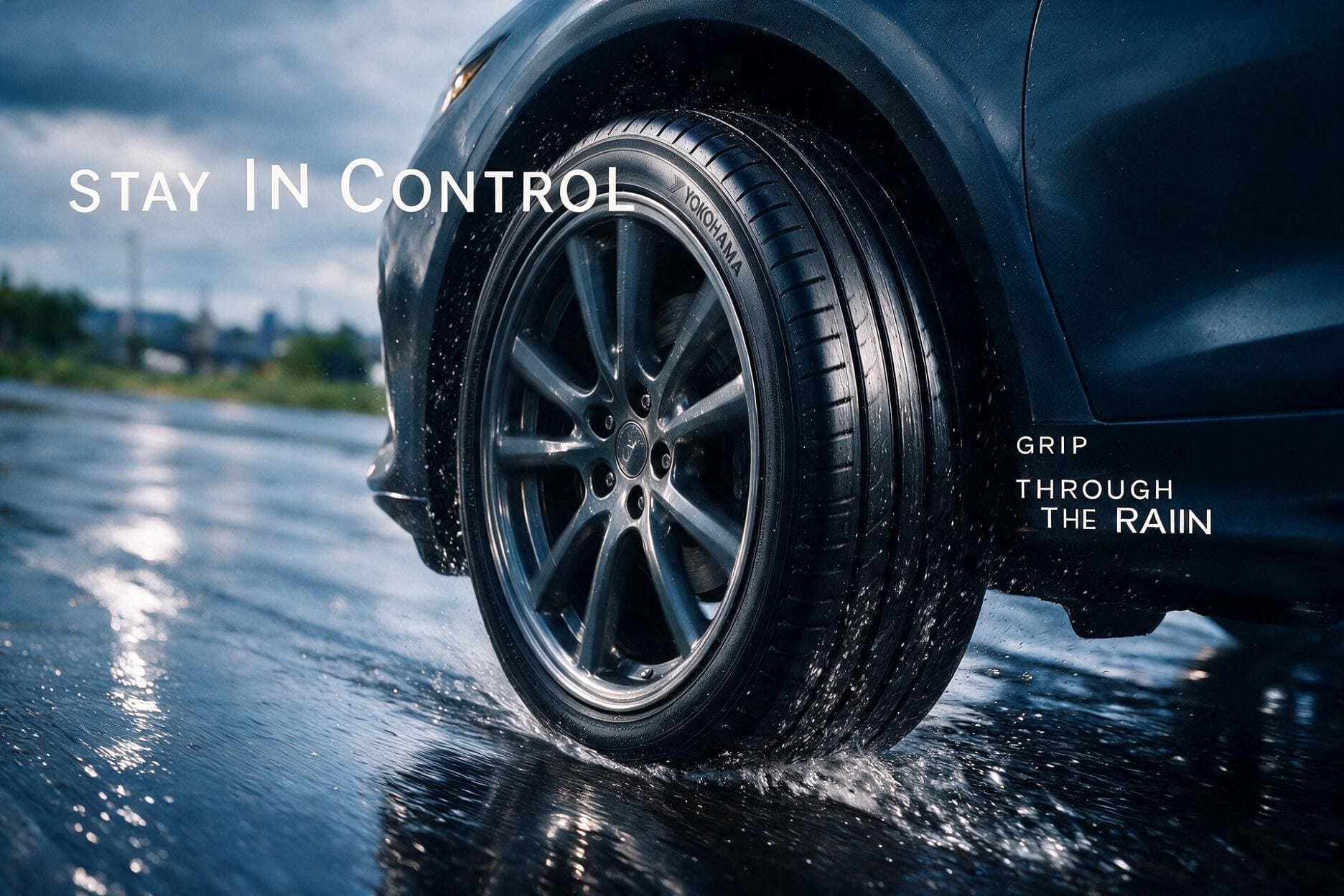
Aquaplaning is what happens when a wedge of water lifts your tyres off the road so they skim across the surface instead of gripping it. The moment it starts, your steering, braking and acceleration stop responding, which is why every driver in Malaysia needs to understand it before the next downpour.
What Is Aquaplaning?
Aquaplaning is the loss of contact between a tyre and the road when water builds up faster than the tread can clear it. The same hazard is widely called hydroplaning, and the two terms describe exactly the same event, so a search for either one points to the same problem.
Under normal conditions, the grooves in your tread channel water out from beneath the contact patch and let the rubber meet the tarmac. When you drive too fast through standing water, that channelling capacity is overwhelmed and a thin film of water separates the tyre from the surface. At that point the tyre loses grip with the road and the car can stop responding to the wheel and pedals, leaving you a passenger until traction returns.
The danger is not limited to extreme storms. Wet pavement is the single biggest weather-related crash factor on the road, and figures showing that wet roads are involved in the majority of weather-related crashes each year underline why a routine rainy commute deserves real caution.
What Causes Aquaplaning?
Aquaplaning is caused by a combination of factors that all reduce how much water your tyres can move. No single one acts alone, and the risk climbs sharply when several line up at once.
Speed
Speed is the biggest factor you control directly. The faster you drive, the less time each tyre has to push water aside, and the likelihood of aquaplaning rises significantly once speed climbs past roughly 56 kilometres per hour. Easing off in the rain gives the tread the split second it needs to clear the road.
Worn tread
Tread depth decides how much water the tyre can evacuate. As the grooves wear down, their water-clearing volume shrinks, and tyres become far more prone to aquaplaning once the tread falls below around 3mm. Shallow tread is the quiet reason a car that felt fine last year suddenly feels nervous in the wet. It is worth getting into the habit of checking your tread depth regularly rather than waiting for a problem to appear.
Standing water
The hazard needs water to sit on the road, and Malaysia supplies plenty of it. Heavy, sudden bursts pool on highways faster than drains can cope, especially in the wheel ruts of older lanes. Puddles after a flash storm, low-lying stretches and poorly drained corners are all places where a film deep enough to float a tyre can form in seconds.
Under-inflation
Pressure shapes the contact patch, and a soft tyre spreads it in a way that traps water instead of cutting through it. An under-inflated tyre flexes and rounds at the edges, reducing the bite the tread can take on a wet surface. Keeping each tyre at the correct air pressure for your car is one of the simplest defences against the problem.
What to Do If Your Car Starts Aquaplaning
If your car starts aquaplaning, the goal is to do as little as possible and let grip return on its own. Sudden inputs are what turn a brief slide into a spin, so the response is mostly about staying calm and waiting.
First, ease your foot off the accelerator gently rather than lifting off sharply. Reducing power lets the car slow naturally so the tread can start biting again. Second, do not brake hard. Stamping on the brakes while the tyres are floating can lock a wheel and send the car sliding, so it is far safer to keep off the brakes and hold a straight course until you feel the road return.
Third, hold the steering wheel steady and pointed straight ahead. Jerking the wheel during aquaplaning means the front tyres will be turned at the exact moment grip snaps back, which can throw the car off line. Keep your hands still and your direction true. Finally, wait for grip to return. Within a short distance the tyres usually find the surface again, and only then should you make slow, gentle steering or braking inputs to settle the car. The whole sequence is ease off, stay off the brakes, hold straight, and wait.
How to Prevent Aquaplaning in Malaysia
Preventing aquaplaning is far easier than reacting to it, and a few consistent habits remove most of the risk before you ever feel a slide. Prevention works on the same factors that cause the problem, so it targets speed, tread, pressure and how you drive.
Slow down in the rain. Lower speed is the most effective single defence, because it directly gives the tread more time to clear water and keeps the contact patch on the road. Treat heavy rain as a reason to drop well below your usual pace, not just a few kilometres per hour.
Maintain tread depth and pressure. A tyre can only fight water if its grooves are deep and its pressure is right, and wet grip falls away as the tread wears toward the legal minimum. Check both regularly, and know when it is time to change your tyres rather than running them to the limit through a monsoon.
Avoid cruise control in the wet. Cruise control keeps power on and can even add throttle to hold speed at the worst possible moment, so switching it off in rain keeps you, not the system, in charge of how the car responds to standing water.
Follow the tracks of the vehicle ahead. The car in front pushes water out of its path, so driving in its wheel lines, while keeping a safe gap, puts your tyres on a surface that has already been partly cleared. Combined with reading the road for puddles and pooling, it lets you avoid the deepest water before you reach it.
Aquaplaning, the Monsoon and Tread Limits in Malaysia
Aquaplaning is a year-round risk in Malaysia because the climate delivers exactly the conditions it needs. During the northeast monsoon, which runs from around November to March and brings heavy rain to the country, highways flood quickly and standing water becomes a daily hazard rather than an occasional one. Sudden afternoon thunderstorms through the rest of the year do much the same on shorter notice.
This is where tread depth matters most for drivers in Malaysia. The law sets a floor: a tyre must keep a minimum tread depth of 1.6mm across the full width of its contact surface, a standard JPJ enforces strictly. That figure is the legal minimum, not a safe target for wet roads.
The gap between legal and safe is the point worth remembering. Wet grip drops well before a tyre reaches 1.6mm, and safety bodies advise replacing tyres at around 3mm because that is where the risk of aquaplaning starts to rise steeply. In a country that sees as much rain as Malaysia, treating 3mm rather than 1.6mm as your replacement point buys back a large margin of wet-weather safety. If you are noticing uneven or rapid wear, it is worth understanding what causes tyres to wear out so you can fix the underlying cause.
Wet-Weather Grip Starts With the Right Tyres From Yokohama
Every defence against aquaplaning ends at the same place: the tread that meets the road. Driving habits and pressure checks matter, but the tyre itself is what clears the water and holds the line in a downpour, so the brand you fit is a wet-weather safety decision in its own right.
Yokohama has been engineering that grip since 1917, and the award-winning Japanese tyre maker was the first in Japan to earn ISO 9001 certification for its quality management. Malaysian drivers can choose across three purpose-built ranges: the performance-focused ADVAN line, the GEOLANDAR range for SUVs and light trucks, and the fuel-efficient BluEarth family for everyday cars. Every set is backed by the Yokohama We Care Road Hazard Warranty and supported by authorised dealers nationwide, with Yokohama Tyre Sales Malaysia as the sole official importer for the country.
When the monsoon arrives and the roads turn to water, the surest way to keep aquaplaning at bay is deep, dependable tread you can trust. Find the right fit for your car and the wet seasons ahead at Yokohama.
Frequently Asked Questions About Aquaplaning
What is aquaplaning?
Aquaplaning is when a layer of water builds up between your tyres and the road faster than the tread can clear it, so the tyres skim across the surface and lose grip. While it is happening, steering, braking and acceleration all stop responding normally.
Is aquaplaning the same as hydroplaning?
Yes. Aquaplaning and hydroplaning are two names for the identical event, with aquaplaning the more common term in Malaysia and the United Kingdom and hydroplaning more common in the United States. There is no difference in what they describe.
At what speed does aquaplaning happen?
There is no single fixed speed, because it depends on water depth, tread and pressure, but the risk increases sharply once you go past roughly 56 kilometres per hour through standing water. Slowing down well below your normal pace in rain is the most reliable way to lower the chance of it starting.
Should you brake when aquaplaning?
No, you should not brake hard. Braking while the tyres are floating can lock a wheel and trigger a skid, so the safer response is to ease off the accelerator, hold the wheel straight, and wait for grip to return before making any gentle braking input.
How do I stop my car from aquaplaning in the rain?
Slow down, keep your tread depth and tyre pressure healthy, switch off cruise control, and follow the cleared tracks of the vehicle ahead while watching for standing water. Keeping tread well above the 1.6mm legal minimum is especially important for wet Malaysian roads.
Sources
- TyreSafe – What is aquaplaning and hydroplaning?
- TyreSafe – The Complete Guide to Tyre Tread Depth
- TyreSafe – Tyre Wet Traction
- RAC – What is aquaplaning and how to avoid it
- National Highway Traffic Safety Administration – Tires
- Malaysian Meteorological Department – Weather Phenomena
- Paul Tan’s Automotive News – Minimum 1.6 mm tread depth across entire tyre surface a must for all commercial vehicles, JPJ
- Yokohama Tyre Malaysia – Official website