
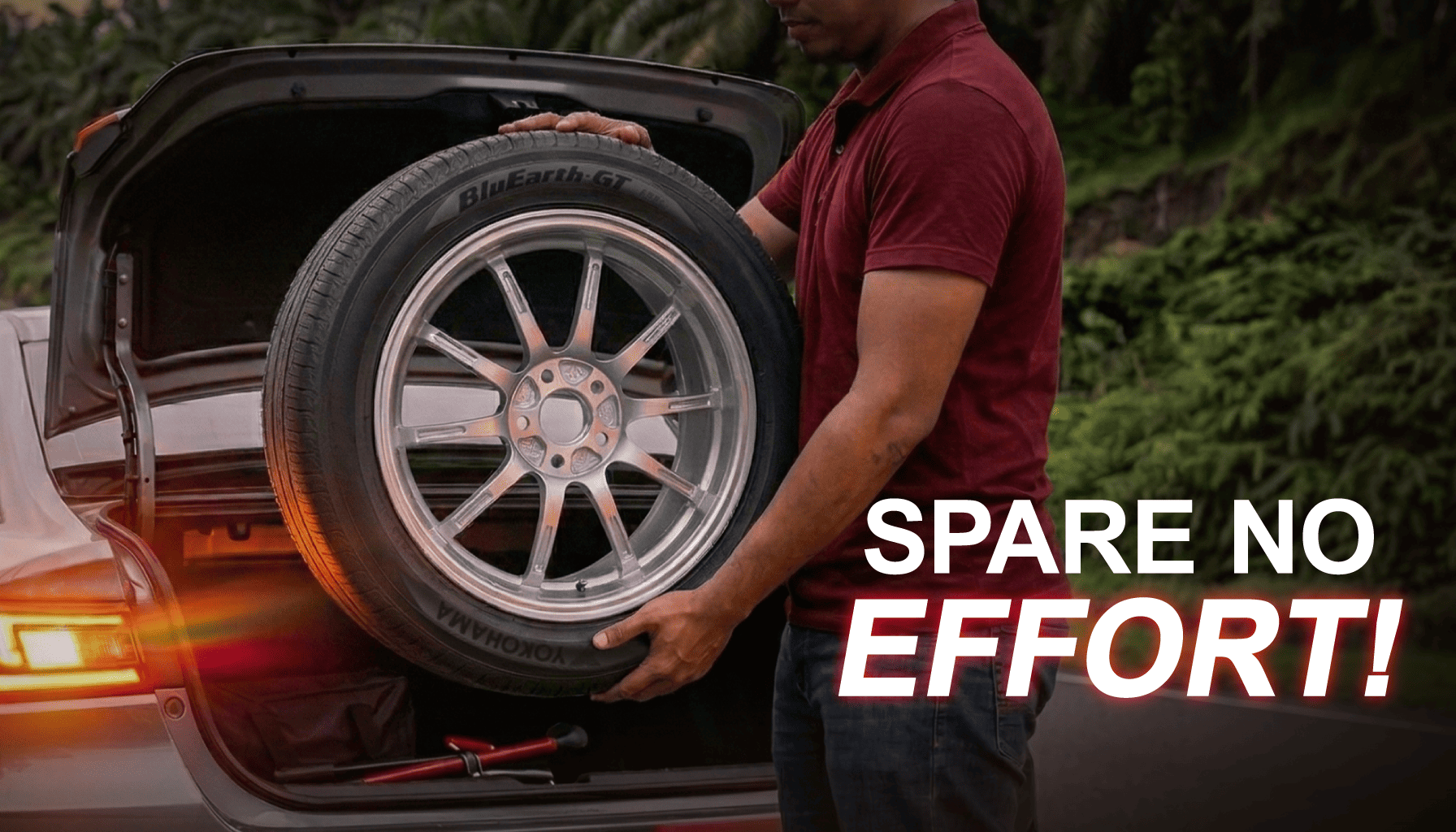
A spare tyre can turn a puncture from a major disruption into a manageable stop, but only if it is in good condition and used properly. Many drivers do not think about the spare until they need it, only to realise they are not sure whether it is safe to fit, how far they can drive on it, or whether it even has enough air pressure.
Some vehicles carry a full-size spare, while others come with a temporary-use spare or a puncture repair kit instead. Temporary-use spares are designed for limited use and may carry speed or distance restrictions, so the vehicle handbook and tyre markings should always be checked before driving on one.
Spare Tyre Explained
A spare tyre is an extra wheel and tyre kept in the vehicle for temporary use after a puncture or tyre failure. Its purpose is simple: to help you continue your journey safely enough to reach a tyre shop, workshop, or another safe stopping point.
That short answer is the key one. A spare tyre is there to help you recover from an unexpected problem, not to replace a damaged tyre as a long-term solution. Temporary-use spares and repair kits are intended to get the vehicle moving again until the original tyre can be inspected, repaired, or replaced properly.
Types of Spare Tyre You Might Have
Not every spare tyre is the same, and the type fitted to your car affects how it should be used.
A full-size spare is closest to a normal road tyre. It is usually intended to match the vehicle’s standard fitment or an approved equivalent, which makes it the more straightforward option if you need to continue driving before replacing the damaged tyre.
A space-saver spare is smaller and lighter, and it is meant only for short-term use. Space-saver spares are commonly supplied to save space and weight, but they are not designed to be treated like a standard wheel. Guidance from both TyreSafe and The AA describes these as temporary solutions that come with operating limits.
Some vehicles do not carry a spare wheel at all. Instead, they may come with a puncture repair kit, which can help in some situations but is not suitable for every type of damage. As ABC news notes in its segment on why newer cars may not include a spare tyre, this has become more common in newer vehicles, making it worth checking what your car actually includes before an emergency happens.
Why a Spare Tyre Still Matters
A spare tyre is easy to ignore when your car is running normally, but it becomes important the moment a puncture leaves you stranded. Even if you have roadside assistance, having a usable spare can reduce downtime and help you get moving again more quickly.
It also matters from a safety point of view. Driving on a damaged or flat tyre can make the vehicle harder to control and may cause further damage. A properly maintained spare tyre gives you a safer temporary option while you arrange a proper inspection or replacement.
What to Check Before You Need Your Spare Tyre
The worst time to inspect a spare tyre is during an emergency at the roadside. It makes much more sense to check it as part of routine tyre care, so you already know it is ready if something goes wrong.
A few simple checks go a long way:
- make sure the spare tyre is actually in the vehicle
- inspect the tread and sidewall for visible damage
- check that it is inflated correctly
- confirm the jack and wheel tools are still in the car
- look for any restrictions printed on the tyre sidewall
This is also a good point to review your after-sales support. If you are replacing tyres or checking what protection applies after purchase, it helps to look through the Yokohama warranty so you understand the available local coverage and support.
How to Use a Spare Tyre Safely
Using a spare tyre safely starts with one principle: treat it as a temporary measure. Once it is fitted, drive carefully and avoid using it as if it were a standard road tyre.
A practical approach is to:
- fit the spare only if it is suitable for the vehicle
- drive gently and avoid sudden braking or hard cornering
- follow any speed or distance limits shown in the handbook or on the tyre
- arrange a repair or replacement as soon as possible
For general guidance, this overview of tyre repair and spare tyre safety explains why temporary-use spares should only be used within the limits stated by the vehicle manufacturer.
Can You Drive Long Distances on a Spare Tyre?
In most cases, no. A spare tyre should be treated as a short-term solution rather than something to drive on for extended distances. That is especially important if your car uses a space-saver spare, because those are specifically intended for temporary use and may have clear operating limits. TyreSafe’s current guidance says space savers should generally be driven no faster than 50 mph and no further than 50 miles unless the manufacturer states otherwise.
The safest mindset is to treat a spare tyre as a bridge, not a replacement. Once it is fitted, the next priority should be getting the original tyre inspected and dealing with the underlying problem properly.
How to Choose the Right Replacement After Using a Spare Tyre
A spare tyre solves the immediate problem, but it is not the end of the decision. After a puncture, you still need to decide whether the damaged tyre can be repaired or whether it should be replaced. Choosing the right replacement matters, especially as the New Straits Times highlighted the risks of cheap, uncertified tyres, making quality and proper certification important factors when buying.
If you are ready to compare suitable replacements, browse the Yokohama product range to find options that match your vehicle, driving conditions, and fitment needs.
Before making that choice, it also helps to understand the warning signs more clearly. This guide on how to know if tyre is punctured is a useful next read if you are unsure whether the damage is minor, slow, or serious enough to need immediate replacement.
Don’t Wait Until You Need It
A spare tyre is only useful if it is in good condition, properly inflated, and used the right way. That is why checking it before a puncture happens matters just as much as knowing how to fit it.
If your current tyres are worn, damaged, or close to replacement, now is a good time to take action. Visit Yokohama Tyre Malaysia to explore suitable options, review support information, and choose tyres that match your vehicle and driving needs before the next unexpected puncture happens.
FAQ
1. Is a spare tyre meant for permanent use?
No. A spare tyre is generally a temporary solution meant to help you continue your journey until the damaged tyre can be repaired or replaced properly.
2. What is the difference between a full-size spare and a space-saver spare?
A full-size spare is closer to a standard road tyre, while a space-saver spare is smaller, lighter, and intended for temporary use only.
3. Should I check the pressure of my spare tyre?
Yes. A spare tyre should be checked regularly so it is ready if you need it, along with the jack and wheel tools kept in the vehicle.
4. What should I do after using a spare tyre?
Arrange for the damaged tyre to be inspected, repaired, or replaced as soon as possible. A spare tyre is a short-term solution, not the final fix.