
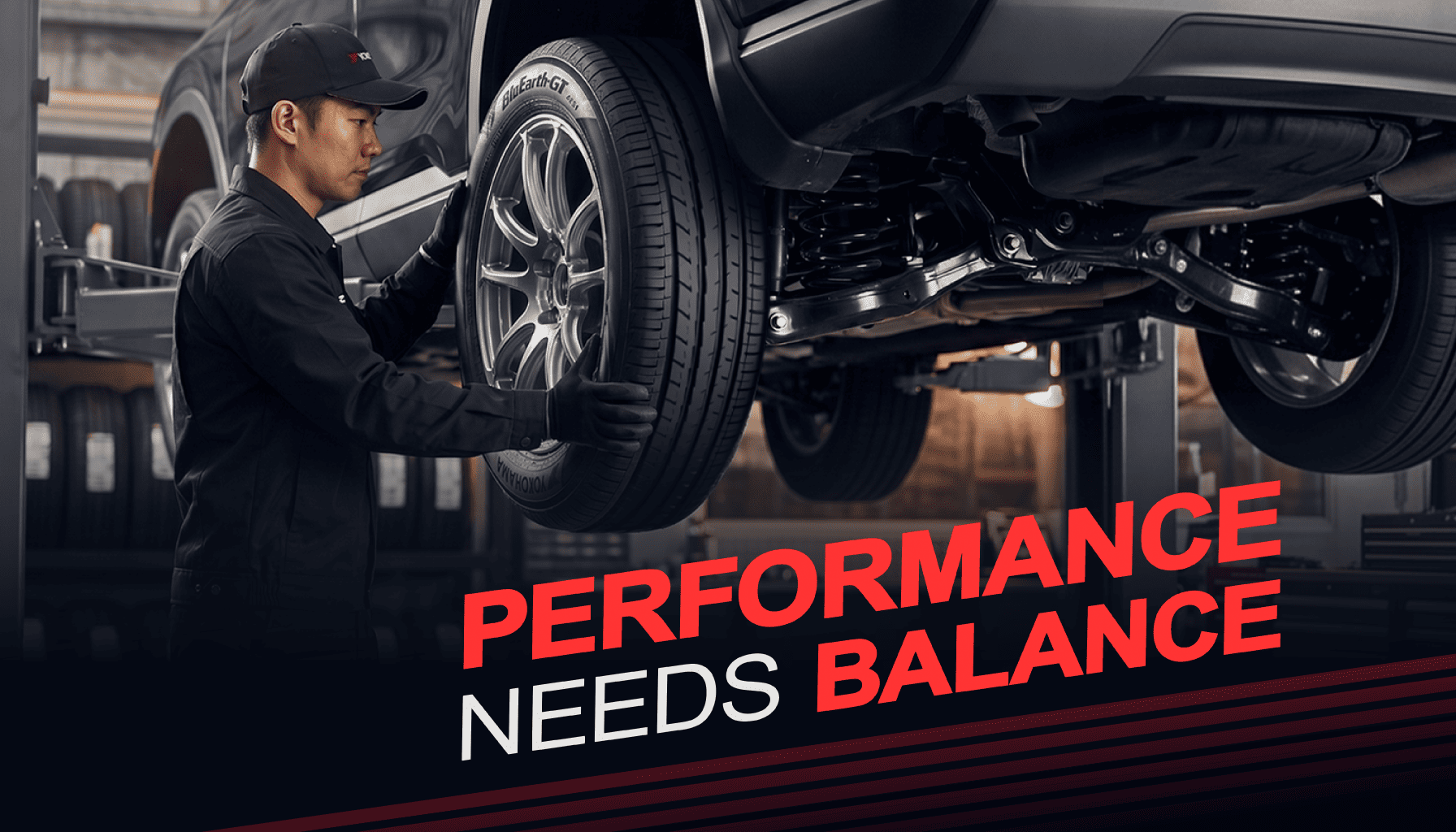
Tyre rotation is the practice of moving each tyre to a different position on your vehicle at regular intervals so that all four wear down at a similar rate. Done on schedule, it is one of the simplest and cheapest ways to extend the life of your tyres and keep your car safe on Malaysian roads.
This guide explains what tyre rotation is, why it matters, how often to do it, and which rotation pattern suits your vehicle. It also covers the warning signs of uneven wear, how rotation differs from alignment and balancing, and what the service typically costs in Malaysia.
What Is Tyre Rotation?
Tyre rotation means swapping the positions of your tyres in a set pattern, for example moving the front tyres to the rear and the rear tyres to the front. The purpose is to even out the wear that naturally builds up unevenly across the four corners of a car.
Tyres wear at different rates depending on where they sit. The driven wheels and the steering wheels carry more load and do more work, so they shed tread faster than the others. By rotating them, you spread that workload across the whole set, which means the tyres reach the end of their usable tread at roughly the same time.
This matters because tyres are sold and replaced as matched sets for good reason. When all four wear evenly, you keep balanced grip across the vehicle, and you replace the full set in one planned purchase rather than buying odd pairs at awkward intervals.
Why Tyre Rotation Matters
Regular tyre rotation delivers four clear benefits: longer tyre life, safer handling, better fuel economy, and easier warranty claims. Each one comes back to the same mechanism, which is keeping tread depth consistent across all four tyres.
The first benefit is longer tyre life. Independent testing by Consumer Reports shows that rotating on schedule promotes even tread wear and helps tyres last their full expected mileage, because no single tyre is left to carry an outsized share of the wear.
The second benefit is safety, and in Malaysia it has a legal dimension. The Road Transport Department (JPJ) sets a minimum legal tread depth of 1.6mm, and from 1 June 2025 that minimum must be met across the entire contact surface of the tyre for commercial vehicles, as reported by paultan.org. Even wear keeps every tyre above that threshold for longer and preserves consistent braking and cornering grip in the wet.
The third benefit is fuel efficiency. Unevenly worn tyres create irregular rolling resistance, which forces the engine to work harder. Keeping the set evenly worn helps the car roll as designed, which supports steadier fuel consumption over time.
The fourth benefit is protecting your warranty. Many tyre warranties expect proof of routine maintenance, including rotation, before honouring a tread-life claim. Keeping a simple service record makes any future claim far smoother.
How Often Should You Rotate Your Tyres in?
As a general rule, rotate your tyres every 8,000 to 10,000 kilometres, or sooner if you notice uneven wear. This range suits most passenger cars and SUVs driven in typical Malaysian conditions of city traffic, highway cruising, and frequent rain.
The interval is also commonly tied to your service schedule. Because 8,000 to 10,000 kilometres lines up roughly with many oil-change intervals, the easiest habit is to rotate the tyres at every alternate service visit. That way the job is never forgotten and rarely adds a separate trip.
International guidance points to a similar window. The United States road safety regulator advises rotating, where the vehicle maker recommends it, every 5,000 to 8,000 miles, which is about 8,000 to 13,000 kilometres, according to NHTSA. The safest single source, however, remains your own vehicle owner’s manual, since some models specify their own interval or pattern.
Driving style and load also shorten the interval. Heavy stop-start city driving, frequent heavy loads, and aggressive cornering all accelerate wear, so drivers in those conditions should lean toward the 8,000 kilometre end of the range or check more often.
Tyre Rotation Patterns by Drivetrain
The correct rotation pattern depends on your vehicle’s drivetrain and tyre type, because the layout decides which wheels do the hardest work. Using the right pattern is what makes rotation effective, and the U.S. Tire Manufacturers Association sets out the standard patterns for each case.
Front-wheel-drive vehicles
For front-wheel-drive cars, which include most compact and family models in Malaysia, the common pattern is the forward cross. The front tyres move straight back, while the rear tyres cross over as they move to the front. This balances the heavier wear that front tyres pick up from doing both the driving and the steering.
Rear-wheel-drive vehicles
For rear-wheel-drive vehicles, the pattern reverses. The rear tyres move straight to the front, and the front tyres cross over to the rear. The principle stays the same, which is to send the harder-worked driven tyres to the lighter-duty positions.
All-wheel-drive vehicles
For all-wheel-drive and four-wheel-drive vehicles, every wheel is driven, so wear is spread more evenly but rotation is still important. A common approach crosses all four tyres, moving each to the opposite corner. All-wheel-drive systems are especially sensitive to mismatched tread, which makes a disciplined rotation schedule more valuable, not less.
Directional and staggered tyres
Some performance tyres need special handling. Directional tyres are built to roll in one direction only, marked by an arrow on the sidewall, so they move straight forward or back on the same side rather than crossing over. Staggered setups, where the rear tyres are wider than the front, often cannot be rotated front to rear at all and may only be swapped side to side if the tyres are non-directional. When in doubt, a fitment specialist should confirm what your specific tyres allow.
How to Rotate Your Tyres Step by Step
Rotating tyres is a straightforward job, though it is safest done with proper equipment at a tyre centre. The following outline shows what the process involves so you know what to expect.
First, the vehicle is parked on level ground with the handbrake on and the wheels chocked for safety. Second, the wheel nuts on all four wheels are loosened slightly while the car is still on the ground. Third, the vehicle is raised on a hoist or with jack stands so all four wheels are clear. Fourth, the tyres are removed and repositioned according to the correct pattern for the drivetrain. Fifth, each wheel is refitted and the nuts are tightened by hand, then torqued to the manufacturer’s specification in a cross or star sequence. Finally, the tyre pressures are checked and adjusted, because the recommended pressure can differ between front and rear positions.
Most workshops also use the moment to inspect tread depth, look for damage, and flag whether wheel balancing or alignment is due. This is why many drivers prefer to have rotation done professionally rather than at home.
Signs Your Tyres Need Rotation
Watch for early signs of uneven wear, because they tell you a rotation is overdue. The clearest signal is a visible difference in tread depth between the front and rear tyres, where one pair looks noticeably more worn than the other.
Other clues are felt rather than seen. A new vibration through the steering wheel at speed, a faint humming or roaring from the tyres, or the car pulling gently to one side can all point to uneven wear, although these symptoms can also indicate balancing or alignment problems. Edge wear, where the shoulders of a tyre wear faster than the centre or the reverse, is another common pattern that rotation helps manage.
You can check tread depth yourself using the wear indicator bars moulded into the grooves at the 1.6mm legal limit, a feature explained in the U.S. Tire Manufacturers Association care guidance. When the tread sits level with those bars, the tyre has reached the legal minimum and must be replaced, not merely rotated.
Tyre Rotation, Wheel Alignment, and Balancing
Tyre rotation is often confused with wheel alignment and wheel balancing, but the three are separate services that solve different problems. Understanding the difference helps you ask for the right work and avoid paying for the wrong one.
Tyre rotation changes the position of the tyres to even out wear, and it requires no special machinery beyond a hoist and a torque wrench. Wheel balancing corrects tiny weight imbalances in a tyre and wheel assembly by adding small weights, which cures vibration. Wheel alignment adjusts the angles of the suspension so the tyres meet the road correctly, which stops pulling and edge wear.
In practice these services complement each other. A workshop will often rotate and balance together, and recommend an alignment check if it spots wear or handling symptoms that rotation alone cannot fix.
How Much Does Tyre Rotation Cost in Malaysia?
Tyre rotation is one of the most affordable services in vehicle maintenance, and many tyre shops offer it at a low cost or even free when you buy your tyres from them. As a guide, a standalone rotation at an independent workshop is usually inexpensive, while bundles that combine rotation with balancing cost a little more.
The bigger saving is indirect. Spending a small amount on rotation every 8,000 to 10,000 kilometres can add thousands of kilometres of usable life to a set of tyres, which delays a far larger replacement bill. Seen that way, routine rotation pays for itself many times over.
Tyre Rotation and Your Yokohama Warranty
Routine rotation also supports your tyre warranty, which is where buying from an authorised channel pays off. Yokohama Tyre Sales Malaysia (YTSM) is the sole official importer of Yokohama tyres in Malaysia, and only officially imported tyres carry the brand’s standard 5-Year Limited Warranty. Tyres without the required DOT or ‘E’ marks fall outside that cover, so the source of your tyres matters as much as how you maintain them.
Yokohama also offers the We Care Road Hazard Warranty on qualifying purchases from selected authorised dealers, giving free one-to-one replacement cover for non-repairable road hazard damage such as cuts, bulges, and punctures for six months or 10,000 kilometres, whichever comes first. Pairing that protection with disciplined rotation gives you the longest, safest service life from a set of tyres.
Keep Every Tyre Rolling Longer With Yokohama
Even wear and a disciplined rotation schedule only pay off when the tyre itself is built to last. A well engineered tyre holds its grip in the wet, resists irregular wear, and turns every rotation into extra mileage.
That durability is where Yokohama stands out. An award-winning Japanese tyre brand since 1917, and the first Japanese manufacturer to earn ISO 9001 certification, it is brought to Malaysia by sole official importer Yokohama Tyre Sales Malaysia across three ranges: the race-inspired ADVAN for high performance, the rugged GEOLANDAR for SUVs and all-terrain driving, and the fuel-efficient BluEarth for everyday comfort. Every officially imported set is backed by the We Care Road Hazard Warranty and authorised dealers nationwide.
Ready for a set worth rotating? Explore the range and find a workshop that can rotate, balance, and fit them at Yokohama Tyre Malaysia.
Frequently Asked Questions
What is tyre rotation?
Tyre rotation is the practice of moving each tyre to a different position on the vehicle at set intervals so all four wear evenly. It extends tyre life, maintains balanced grip, and helps keep tread depth above the legal minimum.
How often should you rotate your tyres?
Most passenger cars and SUVs should be rotated every 8,000 to 10,000 kilometres, or sooner if uneven wear appears. Always check your vehicle owner’s manual, as some models specify a different interval.
Which way should tyres be rotated?
The pattern depends on the drivetrain. Front-wheel-drive cars usually use a forward cross, rear-wheel-drive cars use a rearward cross, and all-wheel-drive vehicles often cross all four tyres. Directional and staggered tyres follow special rules and should be checked with a specialist.
Can I rotate my own tyres?
Yes, with a proper jack, jack stands, and a torque wrench, though many drivers prefer a workshop. A professional rotation also includes a tread inspection and a check of whether balancing or alignment is needed.
What is the difference between tyre rotation, balancing, and alignment?
Rotation changes tyre positions to even out wear, balancing corrects weight imbalances that cause vibration, and alignment adjusts suspension angles so tyres meet the road correctly. They are separate services that are often done together.
Does tyre rotation affect my warranty?
It can. Many tyre warranties expect evidence of routine maintenance, including rotation, before honouring a tread-life claim, so keeping a service record is worthwhile.
Sources
- Consumer Reports – How Often Should You Rotate Your Tires
- NHTSA – Tires
- U.S. Tire Manufacturers Association – Tire Care and Safety
- paultan.org – Minimum 1.6 mm tread depth across entire tyre surface a must for all commercial vehicles, JPJ
- Yokohama Tyre Malaysia – Home