
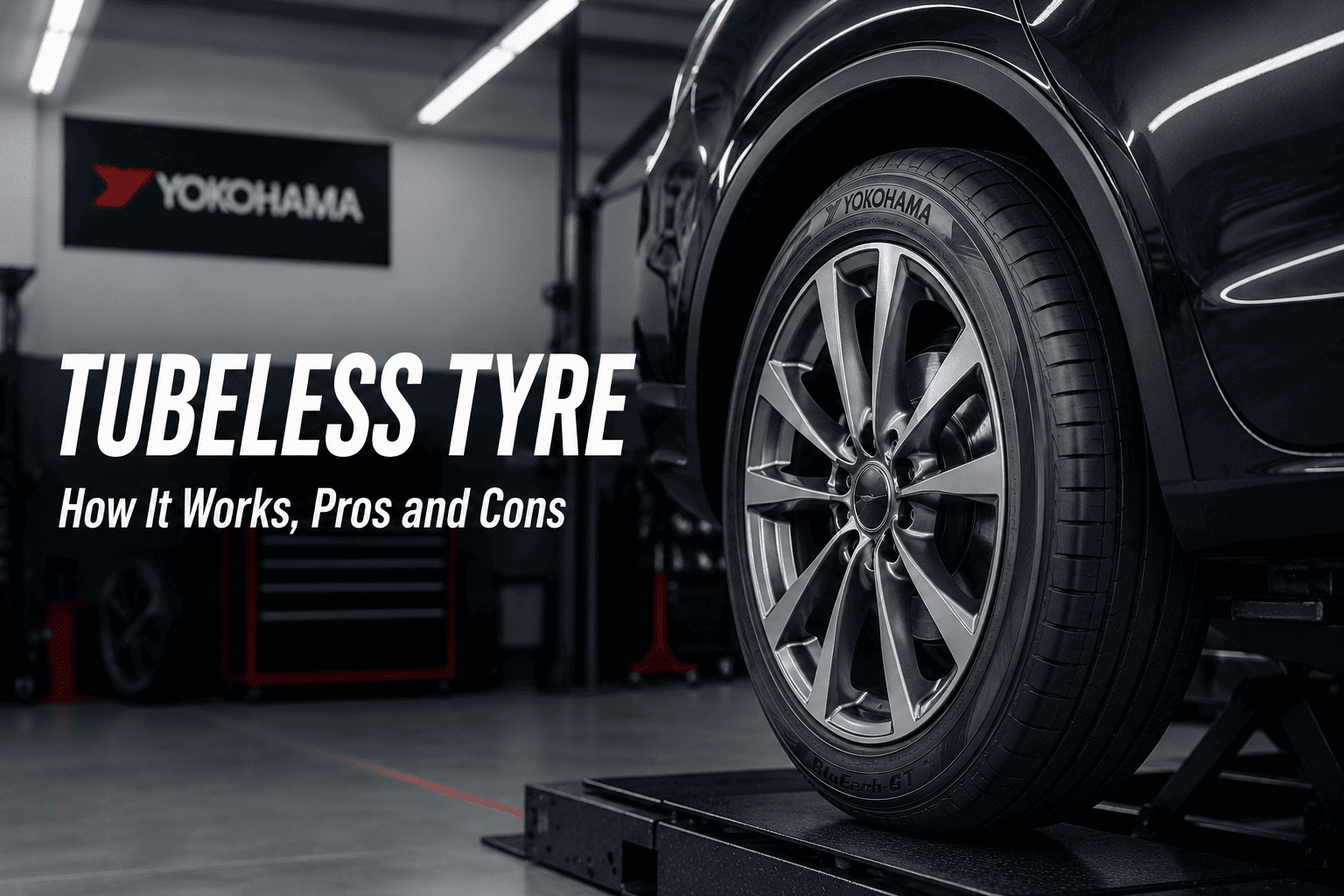
A tubeless tyre is a tyre that holds air without an inner tube, using the tyre and rim together to form an airtight seal. Instead of a separate tube inflated inside the casing, the tyre’s inner lining and a valve fitted directly to the rim do the job of containing the air.
Almost every modern car sold in Malaysia rolls on tubeless tyres, yet most drivers never learn why they replaced the older tube-type design or what advantages they bring. This guide explains how a tubeless tyre works, where it beats tube-type tyres, how punctures are handled, and what to consider before buying.
What Is a Tubeless Tyre?
A tubeless tyre is a tyre designed to retain air pressure on its own, without the inner tube used in older designs. It holds air with an airtight inner liner and a bead that seals against the rim, and because there is no inner tube, it tends to deflate more slowly when punctured. The tyre and the wheel rim form an airtight seal, and an air-retaining valve is mounted directly onto the rim rather than attached to a tube.
The key to the design is the inner liner. A layer of air-impermeable rubber is bonded to the inside of the casing, and this liner does the sealing work that a tube once did, while the tyre bead presses tightly against the rim flange to lock the air in.
This is the opposite of a tube-type tyre. In the older design, a separate rubber tube held the air and the outer tyre mainly provided protection and grip, whereas a tubeless tyre merges both roles into one sealed unit.
How Does a Tubeless Tyre Work?
A tubeless tyre works by trapping air between its sealed inner liner and the rim, so there is no separate component to puncture or pinch. The bead of the tyre seats firmly against the rim, and the airtight liner prevents the pressurised air from escaping through the rubber.
The clever part shows up during a puncture. When a nail or screw pierces a tubeless tyre, the thick tread rubber tends to grip the object and seal around it, so the air escapes only slowly through the narrow gap rather than all at once. Recognising that slow leak early matters, and our guide on how to know if your tyre is punctured helps you spot the signs before you are stranded.
This gradual deflation is a major safety advantage. A tube-type tyre that is pierced tends to lose air quickly because the compressed tube splits, which can cause a sudden, hard-to-control deflation at speed.
Heat management is another part of how tubeless tyres work. Because the air sits in direct contact with the metal rim, heat dissipates more efficiently than in a tube-type tyre, keeping the tyre cooler on long, hot Malaysian highway drives.
Advantages of Tubeless Tyres Over Tube-Type
The biggest advantage of a tubeless tyre is safer, slower deflation when punctured, which buys you precious time to pull over. Instead of an instant flat, you usually get a gradual pressure drop that is easier to control and notice.
Cooler running is a second clear benefit. With the air touching the rim directly, the tyre sheds heat better, and since heat is a leading cause of tyre failure on hot roads, this directly improves durability and safety in our climate.
Simpler repairs round out the case. A tubeless puncture can often be fixed from the outside with a plug, without removing the tyre from the rim, which makes roadside and workshop repairs faster and cheaper than patching a tube.
There is a weight and efficiency gain too. Removing the inner tube lightens each wheel slightly, and tubeless tyres run cooler and reduce unsprung weight, which can modestly help ride quality and fuel economy.
Limitations and Things to Watch
Tubeless tyres are not flawless, and knowing their limits helps you maintain them properly. Most of their weaknesses relate to the seal between tyre and rim.
The rim itself must be airtight and undamaged. A bent, corroded, or cracked rim can break the seal and let air escape around the bead, which is a common cause of slow leaks that have nothing to do with the tread.
Sidewall damage is harder to fix than tread punctures. Punctures in the tread area can often be repaired within strict industry limits, while sidewall or shoulder damage cannot be repaired. A cut or split in the flexible sidewall usually cannot be safely plugged, and our guide on tyre sidewall cuts explains why these often mean the whole tyre must be replaced.
Proper fitting matters more than with tubes. Seating a tubeless bead correctly takes the right equipment, so tubeless tyres should be mounted by a competent workshop to guarantee the seal holds.
Tubeless Tyre Care in Malaysia
Caring for a tubeless tyre in Malaysia comes down to protecting the seal and watching the pressure. The hot climate and rough roads put extra stress on both. Tyres are the only part of the car that touch the road, so maintaining pressure and tread is essential to safety.
Regular pressure checks are essential because tubeless tyres can develop slow leaks from embedded objects or minor rim corrosion. A monthly check catches these early, before a small leak turns into a flat far from help.
Prompt repairs keep small problems small. If you pick up a nail, have it plugged or patched quickly rather than topping up air repeatedly, since riding on a slowly leaking tyre can damage the casing beyond repair. Keeping the rims clean and free of corrosion also preserves the airtight bead seal over the tyre’s life.
Choose Tubeless Tyres Built to Seal and Last
The safety benefits of a tubeless tyre only fully materialise when the tyre is engineered with a high-quality inner liner and casing, which is where the brand behind the tyre matters. A well-built tubeless tyre holds its seal, resists heat, and stays dependable across the life of the tread.
This is where Yokohama stands apart. Yokohama is an award-winning Japanese tyre brand established in 1917 and the first Japanese tyre maker to earn ISO 9001 certification, a heritage of quality assurance reflected in precisely constructed, reliable tubeless tyres. The range fits every driver, from the high-performance ADVAN line, to the rugged GEOLANDAR SUV and off-road range, to the fuel-saving and comfortable BluEarth line.
Choosing Yokohama also brings lasting reassurance. Every set is backed by the We Care Road Hazard Warranty and supported by authorised dealers nationwide, with Yokohama Tyre Sales Malaysia as the sole official importer. To find the right tubeless tyre for your car, explore the full range at Yokohama.
Frequently Asked Questions
What is a tubeless tyre and how is it different from a tube tyre?
A tubeless tyre holds air using its own sealed inner liner and the rim, with no inner tube inside. A tube-type tyre relies on a separate inflated rubber tube to hold the air, making the tubeless design lighter, cooler-running, and safer when punctured.
Are tubeless tyres safer than tube tyres?
Yes, tubeless tyres are generally safer because they tend to deflate slowly when punctured rather than going flat suddenly. This gradual pressure loss gives the driver more time to notice the problem and pull over safely.
Can a tubeless tyre be repaired after a puncture?
Yes, most tread punctures in a tubeless tyre can be repaired with a plug or patch, often without removing the tyre from the rim. However, sidewall cuts usually cannot be safely repaired and require replacing the tyre.
Do tubeless tyres lose air over time?
All tyres lose a little air gradually, and tubeless tyres can also leak slowly through a damaged or corroded rim or an embedded object. Checking pressure monthly helps you catch and fix these slow leaks early.
Do tubeless tyres need special rims in Malaysia?
Tubeless tyres need an airtight rim, which virtually all modern alloy and steel car rims provide. The rim must be undamaged and free of corrosion so the tyre bead can form a proper seal against it.
Sources
- U.S. Tire Manufacturers Association – Tire Repair Basics
- U.S. Tire Manufacturers Association – Tire Care & Safety
- National Highway Traffic Safety Administration – Tire Safety Ratings and Awareness | TireWise
- Consumer Reports – Tire Safety Checklist: What to Do Before Your Next Road Trip
- Yokohama Tyre Malaysia – Home