
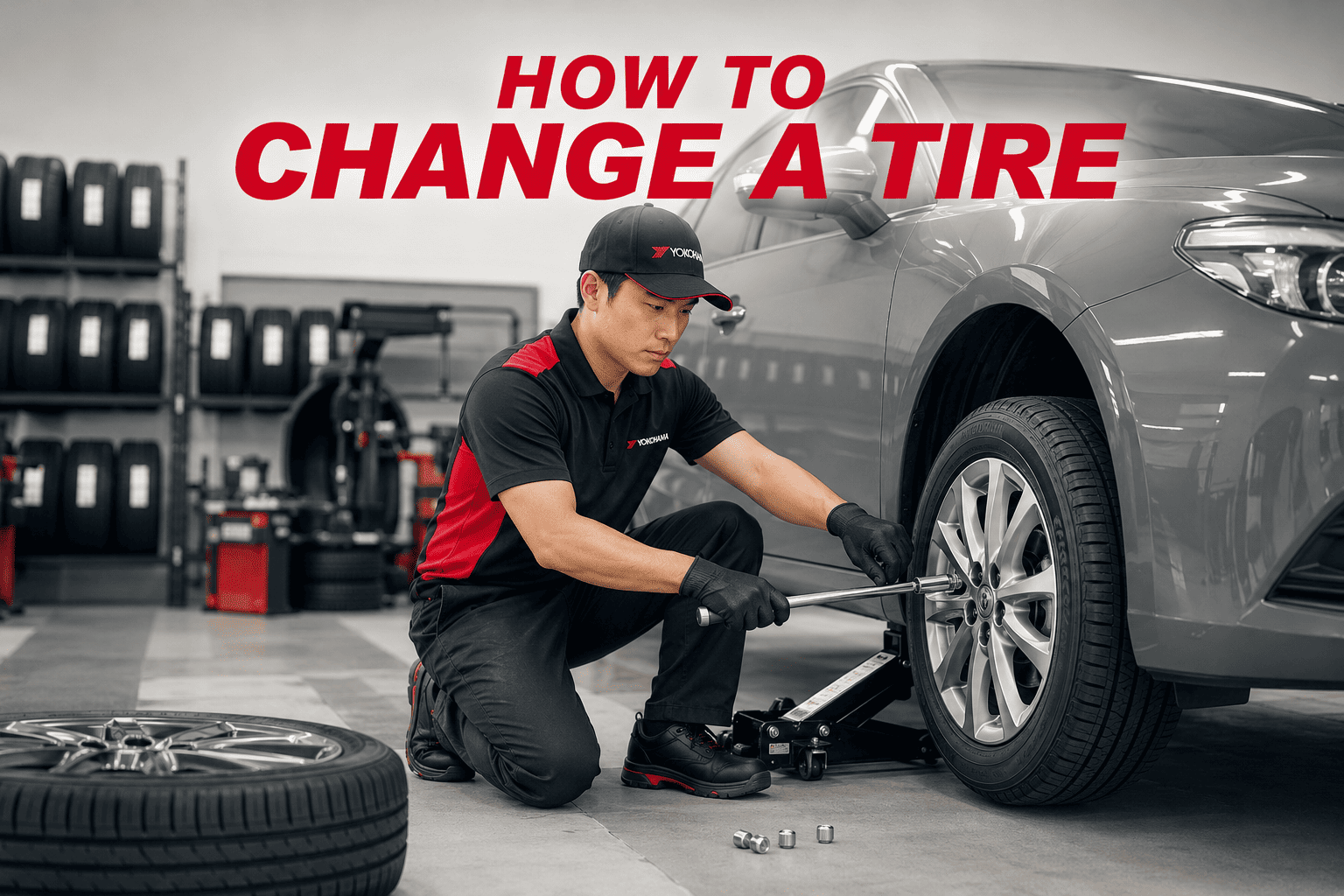
Knowing how to change a tyre is an essential skill for every driver, because a puncture can happen anywhere, at any time. With the right tools and a safe, methodical approach, you can swap a flat tyre for the spare in about fifteen minutes and get moving again.
This guide walks through the whole process for drivers in Malaysia, from parking safely and gathering your tools to fitting the spare and torquing the wheel. It also explains the speed and distance limits to respect once the temporary spare is on.
Before You Start: Safety First
Before touching a single wheel nut, get the car and yourself into a safe position. A roadside tyre change is only safe when the vehicle is stable and clear of traffic.
Pull as far off the road as possible onto firm, level ground, away from bends and fast traffic. Switch on the hazard lights, apply the handbrake, and place the car in Park for an automatic or in gear for a manual. If you have a reflective triangle and a safety vest, set them out, since visibility is the biggest risk on a Malaysian highway shoulder.
If you cannot reach a safe spot, or if heavy traffic makes a roadside change dangerous, stay in a secure position and call for roadside assistance instead. No tyre is worth standing in a live traffic lane.
Tools You Will Need
Changing a tyre needs only a small set of tools, and most cars carry them from the factory. Knowing where they are before an emergency saves valuable time.
The essentials are a serviceable spare tyre, a jack, and a wheel brace or lug wrench, which usually live under the boot floor or in a side compartment. It also helps to have wheel chocks or a heavy object to block the wheels, gloves, and a torch for night-time changes. Check that the spare itself is inflated and in good condition, because a flat spare is no help at all.
Step-by-Step: How to Change a Tyre
Work through the change in a fixed order so nothing is missed. The sequence below follows the safe, standard method for changing a tyre.
First, chock the wheel diagonally opposite the flat tyre to stop the car rolling. Second, with the car still on the ground, use the wheel brace to loosen each wheel nut by about half a turn, because the nuts are far harder to budge once the wheel is in the air. Third, place the jack under the manufacturer’s designated jacking point nearest the flat tyre and raise the car until the flat is just clear of the ground.
Fourth, fully unscrew the loosened nuts and lift the flat tyre off, keeping it nearby to lay the spare on later. Fifth, line up the spare with the wheel bolts and push it firmly into place, then hand-tighten all the nuts. Sixth, lower the car until the spare touches the ground enough to stop it spinning, and tighten the nuts firmly in a diagonal or star pattern so the wheel seats evenly. Finally, lower the car completely, remove the jack, and give the nuts a last firm check.
For peace of mind, have the wheel nuts torqued to the manufacturer’s specification at the next workshop, and stow the flat tyre and tools securely before driving off.
Driving on the Spare Tyre
A temporary or space-saver spare is built to get you to help, not to drive on indefinitely. Treat it as a short-term fix and adjust your driving accordingly.
Keep your speed low and your distance short. Most makers advise driving on a compact spare no faster than 80 kilometres per hour, and only for a limited distance, since these narrow spares offer less grip and longer braking. Always check the sidewall of your own spare, as some carry an even lower limit.
Drive straight to a tyre workshop to have the flat tyre repaired or replaced and a full-size tyre refitted. The longer a space-saver stays on, the more it affects the car’s handling and the stability of its safety systems.
Repair or Replace the Flat Tyre
Once you reach a workshop, the flat tyre is assessed for repair or replacement. Not every puncture can or should be repaired.
Small punctures in the central tread area can often be repaired safely, while damage to the sidewall or shoulder, large holes, or a tyre that was run flat usually means replacement. A professional inspection is the only reliable way to judge, because internal damage is not always visible from outside.
If replacement is needed, fitting a tyre that matches its partner on the same axle keeps grip balanced. This is also a good moment to check the tread depth on the remaining tyres, since the most worn tyre is the one most likely to fail next.
Replace a Flat With a Tyre You Can Trust
Being prepared for a flat tyre starts with having reliable tyres and a spare tyre in good condition. Quality tyres can help reduce the risk of unexpected tyre problems and give you more confidence on the road.
Few brands carry that reassurance like Yokohama. Award-winning and Japanese-engineered since 1917, and the first Japanese maker to earn ISO 9001 certification, it is supplied in Malaysia by sole official importer Yokohama Tyre Sales Malaysia across three ranges: the race-inspired ADVAN for performance, the rugged GEOLANDAR for SUVs and all-terrain use, and the fuel-efficient BluEarth for everyday driving. Every officially imported set includes the We Care Road Hazard Warranty, which covers non-repairable road hazard damage, plus authorised dealers nationwide.
When a flat needs replacing, find your size and a participating workshop nearby at Yokohama Tyre Malaysia.
Frequently Asked Questions
How long does it take to change a tyre?
With the tools ready and a safe spot to work, a tyre change usually takes about fifteen to thirty minutes. Practising once in your driveway makes the roadside version far quicker and calmer.
Do I need to loosen the wheel nuts before jacking up the car?
Yes. Loosen each wheel nut about half a turn while the car is still on the ground, because the wheel will spin and the nuts become very hard to turn once the tyre is raised.
How fast can I drive on a spare tyre?
Most compact or space-saver spares should not be driven faster than 80 kilometres per hour, and only for a short distance. Always check the limit printed on your spare and drive straight to a workshop.
Can a flat tyre be repaired?
Small punctures in the central tread can often be repaired, but sidewall damage, large holes, or a tyre driven while flat usually require replacement. Only a professional inspection can confirm which applies.
What if I cannot change the tyre safely?
If you cannot reach firm, level ground away from traffic, do not attempt the change. Stay in a safe position with hazard lights on and call roadside assistance.
Sources
- AAA Automotive – How To Change a Tyre in 11 Easy Steps
- AAA Club Alliance – How to Change a tyre
- NHTSA – Tyres
- NRMA – How Far Can I Drive on Space Saver Tyres
- Yokohama Tyre Malaysia – Home